29 July 2026 · 1 min read
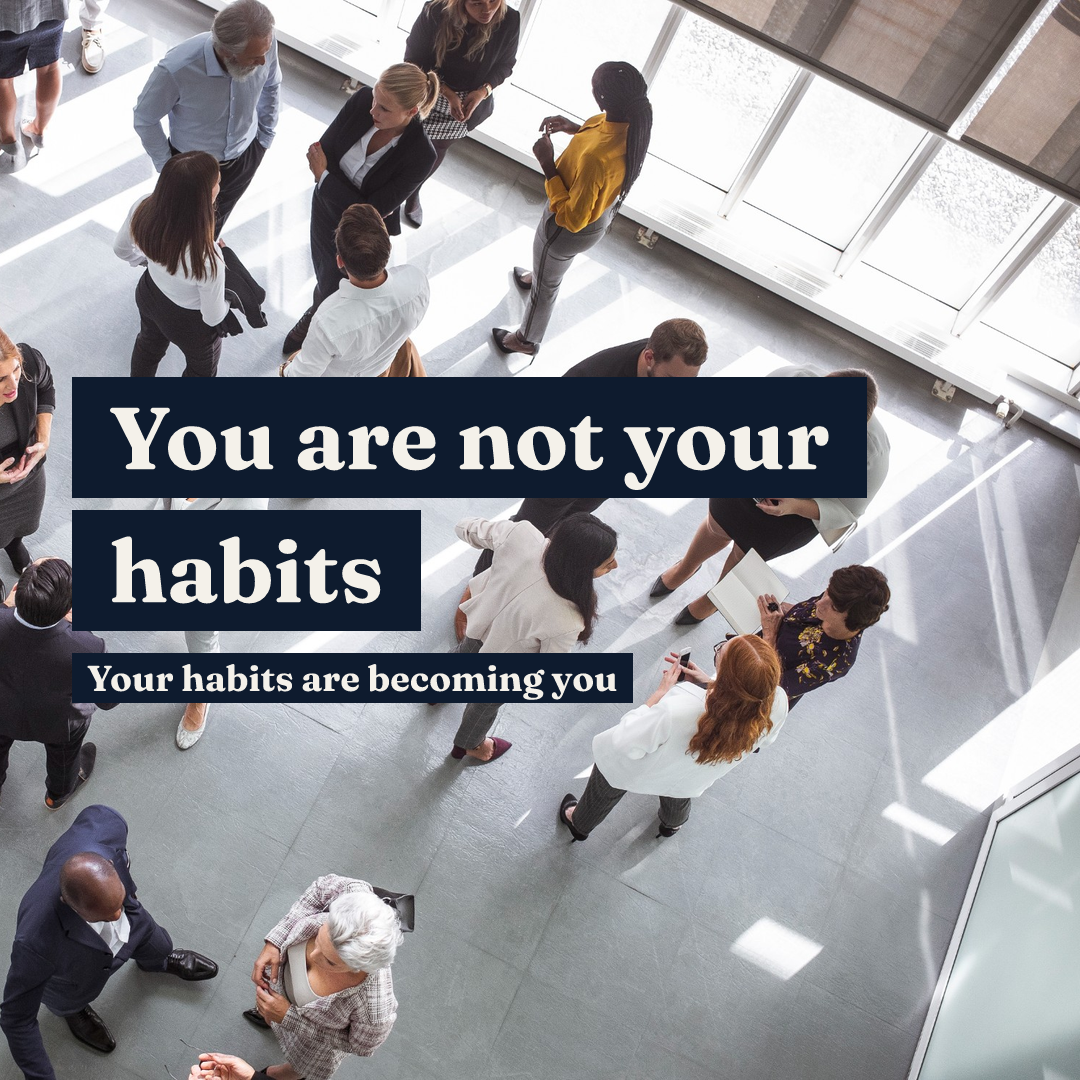
You are not your habits. But your habits are becoming you.
Habits aren't built through willpower, but through repetition. By anchoring habits to identity rather than goals, we make the right action the path of least resistance.
There is a version of you that exercises regularly, sleeps well, responds rather than reacts, and does the things you keep meaning to do. That version isn't more disciplined than you are. They just have different habits running in the background. Here is what the neuroscience of habit formation actually shows: habits are not built through willpower. They are built through repetition in a consistent context — the same cue, the same routine, the same reward — until the behaviour becomes automatic enough that the brain no longer needs to consciously decide to do it.
Which means the goal is not to motivate yourself into action every single day. The goal is to design the conditions in which the right action becomes the path of least resistance.
But there is something even more powerful than habit design. It is identity.
Research by behavioural scientist James Clear shows that the most durable habits are anchored not to a goal but to a belief about who you are. "I'm trying to exercise more" is a goal. "I'm the type of person who moves their body every day" is an identity — and behaviour follows identity far more reliably than it follows intention. The question worth sitting with is not: what do I want to do? It's: who am I becoming? And are my daily habits casting votes for that person — or against them?
One thing to try today: choose one habit you want to build and reframe it as an identity statement. "I'm the type of person who..." Finish that sentence. Say it out loud. See what shifts.